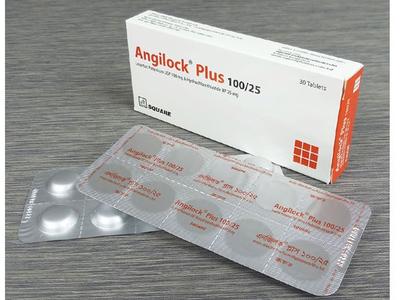
This is indicated for the treatment of hypertension. It is also indicated to reduce the risk of stroke in patients with hypertension and left ventricular hypertrophy.
Combined antihypertensive preparations
Losartan is an angiotensin II receptor antagonist. It selectively and competitively blocks the vasoconstricting and aldosterone-secreting effects of angiotensin II by selectively antagonising its binding to AT1 receptors.Hydrochlorothiazide inhibits the reabsorption of Na in the distal tubules causing increased excretion of Na and water including K and hydrogen ions.
Hypertension:
Usual starting dose: 50/12.5 mg once daily. Titrate as needed to a maximum dose of 100/25 mg.
Hypertensive Patients with Left Ventricular Hypertrophy:
Not controlled on monotherapy: Initiate with 50/12.5 mg. Titrate as needed to a maximum of 100/25 mg.
Dosing must be individualised. The usual starting dose of Losartan is 50 mg once daily, with 25 mg recommended for patients with intravascular volume depletion (e.g., patients treated with diuretics) and patients with a history of hepatic impairment. Losartan can be administered once or twice daily at total daily doses of 25 to 100 mg. If the antihypertensive effect measured trough using once a day dosing is inadequate, a twice a day regimen at the same total daily dose or an increase in dose may give a more satisfactory response. Hydrochlorothiazide is effective in doses of 12.5 to 50 mg once daily and can be given at doses of 12.5 to 25 mg. To minimise dose independent side effects, it is usually appropriate to begin combination therapy only after a patient has failed to achieve the desired effect with monotherapy
Losartan Potassium: No significant drug-drug pharmacokinetic interactions have been found in interaction studies with Hydrochlorothiazide, Digoxin, Warfarin, Cimetidine and Phenobarbital. As with other drugs that block angiotensin II or its effects, concomitant use of potassium-sparing diuretics (e.g. Spironolactone, Triamterene, Amiloride), potassium supplements, or salt substitutes containing potassium may lead to increase in serum potassium. As with other antihypertensive agents, the antihypertensive effect of Losartan may be blunted by the non-steroidal anti-inflammatory drug Indomethacin.Hydrochlorothiazide: When administered concurrently, the following drugs may interact with Thiazide diuretics: alcohol, barbiturates, or narcotics-potentiation of orthostatic hypotension may occur. Antidiabetic drugs (oral agents and Insulin): dosage adjustment of the antidiabetic drug may be required.Other antihypertensive drugs: additive effect or potentiation.Cholestyramine and colestipol resins: absorption of Hydrochlorothiazide is impaired in the presence of anionic exchange resins
The combination of Losartan and Hydrochlorothiazide is contraindicated in patients who are hypersensitive to any component of this product. Because of the Hydrochlorothiazide component, this product is contraindicated in patients with anuria or hypersensitivity to other sulfonamide-derived drugs.
Side-effects are usually mild. Symptomatic hypotension including dizziness may occur, particularly in patients with intravascular volume depletion (e.g. those taking high-dose diuretics). Hyperkalaemia occurs occasionally; angioedema has also been reported with some angiotensin-II receptor antagonists. Vertigo; less commonly gastro-intestinal disturbances, angina, palpitation, oedema, dyspnoea, headache, sleep disorders, malaise, urticaria, pruritus, rash; rarely hepatitis, atrial fibrillation, cerebrovascular accident, syncope, paraesthesia; also reported pancreatitis, anaphylaxis, cough, depression, erectile dysfunction, anaemia, thrombocytopenia, hyponatraemia, arthralgia, myalgia, renal impairment, rhabdomyolysis, tinnitus, photosensitivity, and vasculitis (including Henoch-Schonlein purpura)
When pregnancy is detected, Losartan & Hydrochlorothiazide should be discontinued as soon as possible. It is not known whether Losartan is excreted in human milk. Thiazides appear in human milk. Because of the potential for adverse effects on the nursing infant, a decision should be made whether to discontinue nursing or discontinue the drug, taking into account the importance of the drug to the mother.
Hypersensitivity: Angiooedema
Periodic determination of serum electrolytes to detect possible electrolyte imbalance should be performed at appropriate intervals
Hypokalemia may rarely develop, especially with brisk diuresis, when severe cirrhosis is present, or after prolonged therapy
Impaired renal function and
Symptomatic hypotension
Losartan Potassium: Limited data are available in regard to overdosage in humans. The most likely manifestation of overdosage would be hypotension and tachycardia; bradycardia could occur from parasympathetic (vagal) stimulation. If symptomatic hypotension should occur, supportive treatment should be instituted. Neither losartan nor its metabolite can be removed by hemodialysis.Hydrochlorothiazide: The most common signs and symptoms observed are those caused by electrolyte depletion (hypokalemia, hypochloremia, and dehydration resulting from excessive diuresis. If digitalis has also been administered, hypokalemia, may accentuate cardiac arrhythmias. The degree to which Hydrochlorothiazide is removed by hemodialysis has not been established.
Do not store above 30°C. Keep out of the reach of children.
Combined antihypertensive preparations
Angiotensin II formed from angiotensin I in a reaction catalyzed by angiotensin converting enzyme (ACE), is a potent vasoconstrictor, the primary vasoactive hormone of the renin-angiotensin system and an important component in the pathophysiology of hypertension. It also stimulates aldosterone secretion by the adrenal cortex. Losartan and its principal active metabolite block the vasoconstrictor and aldosterone-secreting effects of angiotensin II by selectively blocking the binding of angiotensin II to the AT1 receptor found in many tissues, (e.g. vascular smooth muscle, adrenal gland). In vitro binding studies indicate that losartan is a reversible, competitive inhibitor of the AT1 receptor. Neither Losartan nor its active metabolite inhibits ACE (kinase II, the enzyme that converts angiotensin I to angiotensin II and degrades bradykinin); nor do they bind to or block other hormone receptors or ion channels known to be important in cardiovascular regulation.Hydrochlorothiazide is a thiazide diuretic. Thiazides affect the renal tubular mechanisms of electrolyte reabsorption, directly increasing excretion of Sodium and Chloride in approximately equivalent amounts. Indirectly, the diuretic action of Hydrochlorothiazide reduces plasma volume, with consequent increases in plasma renin activity, increases in Aldosterone secretion, increases in urinary Potassium loss, and decreases in serum Potassium. The renin-aldosterone link is mediated by angiotensin II, so co-administration of an angiotensin II receptor antagonist tends to reverse the Potassium loss associated with these diuretics.
Angiotensin-II receptor antagonists should be avoided in pregnancy unless essential. They may adversely affect fetal and neonatal blood pressure control and renal function; skull defects and oligohy dramnios have also been reported. Information on the use of angiotensin-II receptor antagonists in breastfeeding is limited. They are not recommended in breastfeeding and alternative treatment options, with better-established safety information during breastfeeding, are available.