Agorest 25 mg
Generic: Agomelatine
Category: Tablet
Manufacturer: Everest Pharmaceuticals Ltd.
Unclassified — prescription required · Upload a prescription at checkout. Pharmacist approval is required before preparation.
Currently unavailable to order.

Allopathic
MFG. Licence No. Biological
178
MFG. Licence No. Non-Biological
336
Address
BSCIC Industrial Estate, Kanchpur Plot No. B-45 & 46

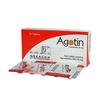
Alternative Brands & Related Medicines

Indications
PO: 25-50 mg at bedtime.
Recommended Dose: 25 mg once daily taken orally at bedtime.
Decision of dose increase has to be balanced with a higher risk of transaminases elevation. Any dose increase to 50 mg should be made on an individual patient benefit/risk basis and with strict respect of liver function test (LFT) monitoring.
After 2 weeks of treatment, if there is no improvement of symptoms, the dose may be increased to 50 mg once daily ie, two 25-mg tab, taken together at bedtime.
Hepatic Impairment: Contraindicated in patients with hepatic impairment.
Therapeutic Class
Atypical anti-depressant drugs
Pharmacology
This compound binds to the melatoninergic receptors and the serotoninergic 5-HT2c receptor giving rise to the Melatonin Agonist and Selective Serotonin Antagonist (MASSA) concept. The melatoninergic receptors MT1 and MT2, are G protein coupled receptors and they act through decreasing cAMP and cGMP. Agomelatine strongly binds to and stimulates the activity of MT1 and MT2 receptors normalizing the disturbed circadian rhythms and disrupted sleep-wake cycles. Unlike the existing antidepressants, agomelatine does not inhibit the uptake of serotonin, norepinephrine or dopamine. It inhibits 5HT-2C receptor (G protein coupled receptor which increases IP3/DAG secondary messenger system) found abundantly in the SCN, frontal cortex, hippocampus and basal ganglia involved in the mood, motor and cognitive deficits associated with depressive states. 5HT-2C receptor antagonism increases norepinephrine and dopamine levels in the frontal cortex of the brain. This action of agomelatine produces antidepressant, antianxiety and also increases slow-wave sleep which is decreased in depression. It has been observed that it can increase neurogenesis in the hippocampus and may also have neuroprotective effects (by influencing glutamate release, glucocorticoid receptor gene expression and various neurotropic factors) which might also contribute to its antidepressant effects. A study has shown that agomelatine alleviates sleep disturbances after one week of therapy and by two weeks antidepressant effects manifest. The combined actions of agomelatine at MT1, MT2, and 5HT-2C receptors can improve the disturbed circadian rhythm and abnormal sleep pattern thus produce the antidepressant effect. These unique effects suggest that it might be effective for the treatment of seasonal affective disorder like anxiety and bipolar depression.
Dosage and Administration
Administration:
Increased or decreased bioavailabity w/ CYP1A2 (eg, fluvoxamine, ciprofloxacin), oestrogens. CYP1A2 inhibitors (eg propanolol, enoxacin). Decreased bioavailabilty w/ rifampicin, smoking. Alcohol.
Adult Dose:
Suicidal thoughts & worsening of depression. Mania, dementia, lactose intolerance. May affect ability to drive or operate machinery. Pregnancy & lactation. Childn & adolescent <18 yr.
lactation: It is not known whether agomelatine is excreted into human milk.
Renal Dose:
Agomelatine possesses both melatonin receptor (MT1 and MT2) agonist and 5-hydroxytryptamine receptor (5-HT2C) antagonist properties. These properties act in a complementary and perhaps synergistic manner to improve depressed states by resynchronization of circadian rhythms, enhancement of dopaminergic and adrenergic input to the frontal cortex, induction of neurogenesis, as well as through other mechanisms. Furthermore, melatonergic agonism and 5-HT2C receptor antagonism also act in harmony to favourably influence anxious symptoms, sleep and sexual function.
Interaction
Co-administration of potent CYP1A2 inhibitors (eg fluvoxamine or ciprofloxacin). Hepatic impairment.
Contraindications
It is contraindicated in patients with hepatic impairment and hypersensitivity to the active substances or any of the excipients.
Side Effects
Renal Impairment: No relevant modification in agomelatine pharmacokinetic parameters in patients with severe renal impairment has been observed.
Pregnancy And Lactation
For agomelatine, no clinical data on exposed pregnancies are available. Animal studies do not indicate direct or indirect harmful effects with respect to pregnancy, embryonal/foetal development, parturition or postnatal development (see Toxicology: Preclinical Safety Data under Actions). Caution should be exercised when prescribing to pregnant women. It is not known whether Agomelatine is excreted into human milk. agomelatine or its metabolites are excreted in the milk of lactating rats. Potential effects of agomelatine on the breastfeeding infant have not been established. If treatment with agomelatine is considered necessary, breastfeeding should be discontinued.
Precautions And Warnings
Precaution:
Major depressive disorder
Overdose Effects
There is limited experience with agomelatine overdose. During the clinical development, there were a few reports of agomelatine overdose, taken alone (up to 450 mg) or in combination (up to 525 mg) with other psychotropic medicinal products. Signs and symptoms of overdose were limited and included drowsiness and epigastralgia. No specific antidotes for agomelatine are known. Management of overdose should consist of treatment of clinical symptoms and routine monitoring. Medical follow-up in a specialised environment is recommended.
Storage Conditions
Store in a cool and dry place away from light. Keep out of the reach of children.
Drug Classes
Atypical anti-depressant drugs
Mode of Action
May be taken with or without food.
Pregnancy Category
Dizziness, somnolence, insomnia, migraine, headache, nausea, diarrhoea, constipation, upper abdominal pain, hyperhidrosis, back pain, tiredness, anxiety, elevated liver enzymes.

Samm Care