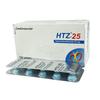
Acuren 25 mg
Hydrochlorothiazide
Category: Tablet
Manufacturer: Incepta Pharmaceuticals Ltd.

Allopathic
MFG. Licence No. Biological
193
MFG. Licence No. Non-Biological
108
Address
Zirabo, Savar, Dhaka Dewan Idris Road, Bara Rangamatia
Price: 0.7 ৳
50 in Blister Pack
100's pack
piece

Medicine Selling service is not available yet.
Related Medicines

Uses of Acuren:
- Hypertension (high blood pressure)
Hypertension, Congestive heart failure, Oedema, Diabetes insipidus, Renal tubular acidosis
Hypersensitivity to sulfonamide-derived drugs, anuria, severe renal impairment.
Thiazide diuretics & related drugs
Thiazides such as hydrochlorothiazide promote water loss from the body (diuretics). They inhibit Na+/Cl- reabsorption from the distal convoluted tubules in the kidneys. Thiazides also cause loss of potassium and an increase in serum uric acid. Thiazides are often used to treat hypertension, but their hypotensive effects are not necessarily due to their diuretic activity. Thiazides have been shown to prevent hypertension-related morbidity and mortality although the mechanism is not fully understood. Thiazides cause vasodilation by activating calcium-activated potassium channels (large conductance) in vascular smooth muscles and inhibiting various carbonic anhydrases in vascular tissue.
How to use
Hydrochlorothiazide:
Take this medicine in the dose and duration as advised by your doctor. Swallow it as a whole. Do not chew, crush or break it.
Hydrochlorothiazide is to be taken with food.
Administration:
Should be taken with food.
Adult Dose:
Oral
Hypertension
Adult: Initially, 12.5 mg, may increase to 25-50 mg once daily as necessary either alone or w/ other antihypertensives.
Elderly: 12.5-25 mg once daily, titrate as necessary in increments of 12.5 mg.
Oedema
Adult: 25-100 mg daily in 1-2 divided doses or intermittently on alternate days or on 3-5 days a wk.
Elderly: 12.5-25 mg once daily, titrate as necessary in increments of 12.5 mg.
Child Dose:
Oral
Hypertension
Child: <6 mth 1-3 mg/kg/day in 1-2 divided doses. Max: 37.5 mg daily;
6 mth to 2 yr 1-2 mg/kg/day in 1-2 divided doses. Max: 37.5 mg daily;
>2-12 yr 1-2 mg/kg/day in 1-2 divided doses Max: 100 mg daily.
Oedema
Child: <6 mth 1-3 mg/kg/day in 1-2 divided doses. Max: 37.5 mg daily;
6 mth to 2 yr 1-2 mg/kg/day in 1-2 divided doses. Max: 37.5 mg daily;
>2-12 yr 1-2 mg/kg/day in 1-2 divided doses Max: 100 mg daily.
Renal Dose:
Renal impairment
CrCl <10 mL/min: Avoid use
CrCl >10 mL/min: Dose adjustment not necessary; not effective with CrCl <30 mL/min unless used in combination with loop diuretic
Increases toxicity of lithium. May potentiate orthostatic hypotension w/ barbiturates and narcotics. Enhanced neuromuscular blocking action of competitive neuromuscular blockers (e.g. atracurium). Increased hypokalaemic effect w/ corticosteroids, corticotropin, beta2 agonists (e.g. salbutamol). Additive effect w/ other antihypertensives. Potentiation of orthostatic hypotension w/ barbiturates or opioids. Reduced antihypertensive effect by drugs that cause fluid retention (e.g. corticosteroids, NSAIDs, carbenoxolone). Enhanced nephrotoxicity of NSAIDs. Reduced therapeutic effect of antidiabetics.
Hypersensitivity to sulfonamide-derived drugs, anuria, severe renal impairment.
Common
- Headache
- Nausea
- Increased blood uric acid
- Decreased potassium level in blood
- Glucose intolerance
- Altered blood lipid level
Electrolyte disturbances, weakness, hypotension, pancreatitis, jaundice, diarrhoea, vomiting, sialadenitis, cramping, constipation, gastric irritation, nausea, anorexia, aplastic anaemia, agranulocytosis, leukopenia, haemolytic anaemia, thrombocytopenia, anaphylactic reactions, necrotising angiitis, resp distress, photosensitivity, fever, urticaria, rash, purpura, hyperglycaemia, glycosuria, hyperuricaemia., muscle spasm, vertigo, paraesthesias, dizziness, headache, restlessness, renal failure, renal dysfunction, interstitial nephritis, erythema multiforme, exfoliative dermatitis, alopecia, transient blurred vision, xanthopsia, impotence.
Potentially Fatal: Hypersensitivity reactions.
Pregnancy: Evidence of fetal risk in hydrochlorothiazide therapy is found, but it is indicated if benefits outweigh risks. Thiazides are indicated in pregnancy when edema is due to pathologic causes.Lactation: Neonatal side effects have been seen incase of hydrochlorothiazide therapy and therefore it is not recommended.
Precaution:
Patients w/ electrolyte disturbances, history of gout, allergy or bronchial asthma, DM, parathyroid disease, hypercholesterolaemia. May exacerbate SLE. Hepatic and mild to moderate renal impairment. Pregnancy and lactation. Monitoring Parameters Assess wt, input and output reports daily to determine fluid loss, BP, serum electrolytes, BUN, creatinine.
Lactation: Drug excreted in breast milk; use with caution (American Academy of Pediatrics states that it is "compatible with nursing")
The most common signs and symptoms observed are those caused by electrolyte depletion (hypokalaemia, hypochloraemia, hyponatraemia) and dehydration resulting from excessive diuresis. If digitalis has also been administered, hypokalaemia may accentuate cardiac arrhythmias. In the event of overdosage, symptomatic and supportive measures should be employed. If ingestion is recent, emesis should be induced or gastric lavage performed. Dehydration, electrolyte imbalance, hepatic coma and hypotension should be corrected by established methods. If required, give oxygen or artificial respiration for respiratory impairment.
Keep below 30°C temperature, away from light & moisture. Keep out of the reach of children.
Thiazide diuretics & related drugs
Hydrochlorothiazide inhibits the reabsorption of Na and chloride in the distal tubules causing increased excretion of Na and water K and hydrogen ions.
Use in pregnancy: Thiazides cross the placental barrier and appear in cord blood. The use of Hydrochlorothiazide when pregnancy is present or suspected requires, therefore, that the benefits of the drug be weighed against possible hazards to the fetus. These hazards include fetal or neonatal jaundice, thrombocytopenia, and possibly other adverse reactions, which have occurred in the adult. The routine use of diuretics in otherwise healthy pregnant women with or without mild oedema is not recommended, because their use may be associated with hypovolaemia, increased blood viscosity and decreased placental perfusion.Use in breastfeeding mothers: Thiazides appear in breast milk. If use of the drug is deemed essential, the patient should stop breast-feeding.

Samm Care