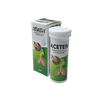
Aceten 100 Powder for Solution 100 mg
Generic: Acetylcysteine
Category: Effervescent Granules
Manufacturer: Eskayef Pharmaceuticals Ltd., Tongi,Gazipur

Eskayef Pharmaceuticals Ltd., Tongi,Gazipur
Allopathic
MFG. Licence No. Biological
215
MFG. Licence No. Non-Biological
449
Address
400 Tongi/ I/A. Squibb Road, Gazipur.

Medicine Selling service is not available yet.
Alternative Brands & Related Medicines

Indications
Uses of Aceten 100 Powder for Solution:
- Respiratory disease with excessive mucus
Oral
As a mucolytic
Adult: As effervescent granules or tablets: 200 mg tid.
Paracetamol poisoning
Adult: After gastric lavage or induction of emesis with ipecac syrup, admin loading dose of 140 mg/kg, followed by maintenance doses of 70 mg/kg every 4 hr for a total of 17 doses. 1st maintenance dose to be given 4 hr after the loading dose. Repeat dose if the patient vomits within 1 hr of admin. Continue therapy until paracetamol levels are not detectable and there is no evidence of hepatotoxicity.
Inhalation
As a mucolytic
Adult: 3-5 ml of a 20% solution or 6-10 ml of a 10% solution 3-4 times daily by nebulising through a face mask, mouth piece or tracheostomy. May increase to 1-10 ml of a 20% solution or 2-20 ml of a 10% solution every 2-6 hr if needed.
Endotracheal
As a mucolytic
Adult: Instill 1-2 ml of a 10-20% solution as often as every hrly.
Oral
As a mucolytic
Child: As effervescent granules or tablets: 2-7 yr: 200 mg bid; <2 yr: 200 mg daily.
Paracetamol poisoning
Child: After gastric lavage or induction of emesis with ipecac syrup, admin loading dose of 140 mg/kg, followed by maintenance doses of 70 mg/kg every 4 hr for a total of 17 doses. 1st maintenance dose to be given 4 hr after the loading dose. Repeat dose if the patient vomits within 1 hr of admin. Continue therapy until paracetamol levels are not detectable and there is no evidence of hepatotoxicity.
Inhalation
As a mucolytic
Child: 3-5 ml of a 20% solution or 6-10 ml of a 10% solution 3-4 times daily by nebulising through a face mask, mouth piece or tracheostomy. May increase to 1-10 ml of a 20% solution or 2-20 ml of a 10% solution every 2-6 hr if needed.
Endotracheal
As a mucolytic
Child: Instill 1-2 ml of a 10-20% solution as often as every hrly.
Therapeutic Class
Antidote preparations, Cough expectorants & mucolytics
Pharmacology
Acetylcysteine is a mucolytic agent that reduces the viscosity of secretions probably by the splitting of disulphide bonds in mucoproteins. Moreover it gives antisecretory effect. These results in clearing of respiratory ducts and facilitate breathing. Acetylcysteine also has anti-oxidant properties by reacting with free radicals and also by serving as a precursor to glutathione, which is an important intra and extra-cellular antioxidant. By providing anti-oxidant action, it neutralizes exogenous and endogenous oxidants, which in fact act as pathogens in respiratory inflammations.
Dosage and Administration
How to use
Acetylcysteine:
Take this medicine in the dose and duration as advised by your doctor. Swallow it as a whole. Do not chew, crush or break it.
Acetylcysteine may be taken with or without food, but it is better to take it at a fixed time.
Administration:
Drug stability and safety of acetylcysteine when mixed with other drugs in a nebulizer have not been established.
Adult Dose:
Asthmatic patients, history of bronchospasm, peptic ulceration. Pregnancy, lactation.
Lactation: Unknown whether agent is excreted in milk; use with caution.
Renal Dose:
Acetylcysteine may decrease the viscosity of secretions by splitting of disulphide bonds in mucoproteins. It also promotes the detoxification of an intermediate paracetamol metabolite which is used in the management of paracetamol overdosage.
Interaction
Acetylcysteine is contraindicated in those patients who are sensitive to it.
Contraindications
Oral
As a mucolytic
Child: As effervescent granules or tablets: 2-7 yr: 200 mg bid; <2 yr: 200 mg daily.
Paracetamol poisoning
Child: After gastric lavage or induction of emesis with ipecac syrup, admin loading dose of 140 mg/kg, followed by maintenance doses of 70 mg/kg every 4 hr for a total of 17 doses. 1st maintenance dose to be given 4 hr after the loading dose. Repeat dose if the patient vomits within 1 hr of admin. Continue therapy until paracetamol levels are not detectable and there is no evidence of hepatotoxicity.
Inhalation
As a mucolytic
Child: 3-5 ml of a 20% solution or 6-10 ml of a 10% solution 3-4 times daily by nebulising through a face mask, mouth piece or tracheostomy. May increase to 1-10 ml of a 20% solution or 2-20 ml of a 10% solution every 2-6 hr if needed.
Endotracheal
As a mucolytic
Child: Instill 1-2 ml of a 10-20% solution as often as every hrly.
Side Effects
Common
- Fever
- Nausea
- Vomiting
- Rash
- Gastrointestinal discomfort
Pregnancy And Lactation
The US Food and Drug Administration has classified Acetylcysteine as category B medicine for pregnant women. Acetylcysteine should only be used in pregnant women when clearly needed.
Precautions And Warnings
Precaution:
Tuberculosis, Chronic emphysema, Paracetamol poisoning, Bronchiectasis, Pneumonia, Atelectasis, Cystic fibrosis, Tracheostomy care, during anaesthesia
Overdose Effects
Overdose of Acetylcysteine may cause nausea, vomiting or diarrhoea.
Storage Conditions
Store in a cool and dry place, protected from light.
Drug Classes
Antidote preparations, Cough expectorants & mucolytics
Mode of Action
Acetylcysteine is a mucolytic agent that reduces the viscosity of secretions probably by the splitting of disulphide bonds in mucoproteins. Moreover it gives antisecretory effect. These results in clearing of respiratory ducts and facilitate breathing. Acetylcysteine also has anti-oxidant properties by reacting with free radicals and also by serving as a precursor to glutathione, which is an important intra and extra-cellular antioxidant. By providing anti-oxidant action, it neutralizes exogenous and endogenous oxidants, which in fact act as pathogens in respiratory inflammations.
Pregnancy Category
Flushing, fever, stomatitis, nausea, vomiting, rhinorrhoea, bronchospasm, anaphylactoid reactions, rashes. Rarely, blurred vision, bradycardia, syncope, thrombocytopenia, convulsions.
Potentially Fatal: Rarely, respiratory or cardiac arrest.


Samm Care