
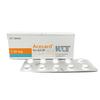
Aceril 2.5 2.5 mg
Ramipril
Category: Tablet
Manufacturer: Ibn Sina Pharmaceutical Ind. Ltd.

Ibn Sina Pharmaceutical Ind. Ltd.
Allopathic
MFG. Licence No. Biological
150
MFG. Licence No. Non-Biological
405
Address
Kaliakair, Gazipur
Price: 5.0 ৳
30 in Blister Pack

Medicine Selling service is not available yet.
Related Medicines

Uses of Aceril 2.5:
- Hypertension (high blood pressure)
- Prevention of heart attack and stroke
- Heart failure
Congestive heart failure, MI, HTN, CV events, Stroke
Hypersensitivity, bilateral renal artery stenosis, or a single kidney with unilateral renal artery stenosis. Aortic stenosis or outflow tract obstruction. History of angioedema (hereditary, idiopathic or due to previous angioedema w/ ACE inhibitors). Pregnancy and lactation.
Angiotensin-converting enzyme (ACE) inhibitors
Ramipril is an angiotensin converting enzyme (ACE) inhibitor, which after hydrolysis to ramiprilat, blocks the conversion of angiotensin I to the vasoconstrictor substance, angiotensin II. So, inhibition of ACE by ramipril results in decreased plasma angiotensin II, which leads to decreased vasopressor activity and decreased aldosterone secretion. Thus ramipril exerts its antihypertensive activity. It is also effective in the management of heart failure and reduction of the risk of stroke, myocardial infarction and death from cardiovascular events. It is long acting and well tolerated; so, can be used in long term therapy.
How to use
Ramipril:
Take this medicine in the dose and duration as advised by your doctor. Swallow it as a whole. Do not chew, crush or break it.
Ramipril may be taken with or without food, but it is better to take it at a fixed time.
Administration:
May be taken with or without food.
Adult Dose:
Oral
Hypertension, Diabetic Nephropathy
Adult: Hypertension
Initial (not on diuretic): 2.5 mg once daily at bedtime.
Initial (with diuretic): 1.25 mg once daily at bedtime.
Maintenance: 2.5-5 mg/day as a single dose, Max: 10 mg/day.
Congestive Heart failure
Adult: Initially, 1.25 mg once daily. Max: 10 mg daily. Doses >2.5 mg may be given in 2 divided doses.
Max Dosage: 10 mg daily in 1-2 divided doses.
Post myocardial infarction
Adult: Initially, 2.5 mg bid, may increase to 5 mg bid after 2 days. Start treatment: 3-10 days after infarction. Maintenance: 2.5-5 mg bid.
Prophylaxis of cardiovascular events in high-risk patients, Stroke Prevention
Adult: Initially, 2.5 mg once daily, may increase to 5 mg once daily after 1 wk if tolerated. Maintenance: 10 mg once daily after a further 3 wk.
Hepatic impairment: Max: 2.5 mg/day.
Child Dose:
Safety and efficacy not established
Renal Dose:
Renal impairment:
CrCl (ml/min) Dosage Recommendation
10-30 Initially, 1.25 mg/day. Max: 5 mg/day.
30-60 Not necessary to adjust the initial dose. Max maintenance dose: 5 mg/day.
May enhance hypotensive effect w/ diuretics and other antihypertensives. May increase risk of renal function deterioration w/ NSAIDs. May increase serum levels and toxicity of lithum. May increase hyperkalaemic effect w/ K-sparing diuretics and supplements.
Potentially Fatal: Concomitant use w/ aliskiren aliskiren may increase the risk of hyperkalaemia, hypotension and nephrotoxicity in patients w/ diabetes or renal impairment
Hypersensitivity, bilateral renal artery stenosis, or a single kidney with unilateral renal artery stenosis. Aortic stenosis or outflow tract obstruction. History of angioedema (hereditary, idiopathic or due to previous angioedema w/ ACE inhibitors). Pregnancy and lactation.
Common
- Decreased blood pressure
- Dizziness
- Fatigue
- Vomiting
- Dry cough
>10%
Cough (7-8%),Hypotension (2-11%)
1-10%
Headache (1-5%),Angina pectoris (3%),Dizziness (2-4%),Nausea (2%),Vomiting (2%),Postural hypotension (2%),Syncope (2%),Vertigo (2%),Abnormal kidney function (1%),Diarrhea (1%)
<1%
Angioedema (0.3%)
Potentially Fatal: Severe hypotension and renal failure, angioedema.
If pregnancy is detected, ramipril should be discontinued as early as possible unless continued use is considered life saving. Ramipril should not be used during lactation.
Precaution:
Renal impairment, hypovolaemia, hyperkalaemia, valvular stenosis; before, during or immediately after anaesthesia. Severe resistant hypertension, elderly, peripheral vascular disease or generalised atherosclerosis. Patient Counselling Inform patients to refrain from activities involving mental alertness and physical coordination after drug intake. Monitoring Parameters Correct volume and/or salt depletion prior to treatment. Monitor BP, serum creatinine and K levels. Monitor renal function during the 1st few wk of treatment and periodically thereafter.
Lactation: Possibly excreted in breast milk; nursing not recommended
Sign and symptom: Overdosage may cause excessive peripheral vasodilatation (with marked hypotension, shock), bradycardia, electrolyte disturbances, and renal failure.Management: Primary detoxifcation by, for example, gastric lavage, administration of adsorbents, sodium sulfate; (if possible during the frst 30 minutes). In the event of hypotension administration of α1-adrenergic agonists (e.g. norepinephrine, dopamine) or angiotensin II (angiotensinamide), which is usually available only in scattered research laboratories, must be considered in addition to volume and salt substitution.
Store at 30° or below, protect from light. Keep out of the reach of children. Do not use later than the date of expiry. To be dispensed only on the prescription of a registered physician.
Angiotensin-converting enzyme (ACE) inhibitors
Ramipril, a prodrug of ramiprilat, competitively inhibits ACE from converting angiotensin I to angiotensin II (a potent vasoconstrictor) resulting in increased plasma renin activity and reduced aldosterone (a hormone that causes water and Na retention) secretion. This promotes vasodilation thus producing a hypotensive effect and a beneficial effect in CHF.
Ramipril must not be taken during pregnancy. Therefore, pregnancy must be excluded before starting treatment. Pregnancy must be avoided in cases where treatment with ACE inhibitors is indispensable. If the patient intends to become pregnant, treatment with ACE inhibitors must be discontinued, i.e. replaced by another form of treatment. If the patient becomes pregnant during treatment, medication with Ramipril must be replaced as soon as possible by a treatment regimen without ACE inhibitors. Otherwise, there is a risk of harm to the fetus. Ramipril is not recommended during breastfeeding.

Samm Care