
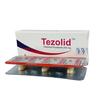
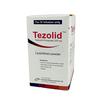
Absi 200 mg
Tedizolid Phosphate
Category: Tablet
Manufacturer: Square Pharmaceuticals PLC, Pabna

Square Pharmaceuticals PLC, Pabna
Allopathic
MFG. Licence No. Biological
033
MFG. Licence No. Non-Biological
114
Address
Salgaria, Pabna Salgaria, Pabna

Medicine Selling service is not available yet.
Related Medicines

Acute bacterial skin and skin structure infections (ABSSSI)
Contraindicated for patients with hypersensitivity to Tedizolid and ingredients
Other antibiotic
After conversion to its active form by phosphatases, tedizolid exerts its antibacterial activity through inhibition of protein synthesis by binding to the 50S ribosomal subunit of susceptible Gram-positive bacteria. Cross-resistance between other non-oxazolidinone antibacterial drugs is unlikely as it inhibits bacterial protein synthesis through a different mechanism.
Administration:
Oral Administration
May take with or without food
IV Administration
Administer as IV infusion over 1 hr
Do NOT give as IV push or bolus
Not for intra-arterial, IM, IT, intraperitoneal, or SC administration
Adult Dose:
Adult: 200 mg PO/IV once daily for 6 days
Hepatic impairment: No dosage adjustment required
Child Dose:
<18 years: Safety and efficacy not established
Renal Dose:
Renal impairment or hemodialysis: No dosage adjustment required
Increased AUC & Cmax of rosuvastatin. Inhibition of BCRP at the intestinal level, increased plasma conc of BCRP substrates, & the potential for adverse reactions especially for BCRP substrates w/ narrow therapeutic index (eg, methotrexate or topotecan), or rosuvastatin.
Contraindicated for patients with hypersensitivity to Tedizolid and ingredients
2-10%
Nausea (8%)
Headache (6%)
Diarrhea (4%)
Hemoglobin <10.1 g/dL (3.1%)
Vomiting (3%)
Platelets <112 x 10³/mm³ (2.3%)
Dizziness (2%)
<2%
Blood and lymphatic system disorders: Anemia
Cardiovascular: Palpitations, tachycardia
Eye disorders: Asthenopia, vision blurred, visual impairment, vitreous floaters
General disorders and administration site conditions: Infusion-related reactions
Immune system disorders: Drug hypersensitivity
Infections and infestations: Clostridium difficile colitis, oral candidiasis, vulvovaginal mycotic infection
Investigations: Hepatic transaminases increased, decreased WBCs
Nervous system disorders: Hypoesthesia, paresthesia, seventh nerve paralysis
Psychiatric disorders: Insomnia
Skin and subcutaneous tissue disorders: Pruritus, urticaria, dermatitis
Vascular disorders: Flushing, hypertension
Pregnancy category C. There are no adequate and well-controlled studies of Tedizolid in pregnant women. Tedizolid should be used during pregnancy only if the potential benefit justifies the potential risk to the fetus.Nursing Mothers: Tedizolid is excreted in the breast milk of rats. It is not known whether tedizolid is excreted in human milk. Because many drugs are excreted in human milk, caution should be exercised when Tedizolid is administered to a nursing woman.
Precaution:
Patients w/ neutropenia (neutrophil counts <1,000 cells/mm3). Discontinue if C. difficile-associated diarrhoea (CDAD) is suspected or confirmed. Patients w/ concomitant complicated skin & soft tissue infection & secondary bacteremia & in treatment of ABSSSI w/ severe sepsis or septic shock; diabetic foot infections, decubitus or ischaemic ulcers, bone or joint infections, severe burns, necrotizing infections or gangrene. May affect ability to drive or operate machinery. Pregnancy & lactation. Childn <18 yr. Elderly ≥75 yr.
In the event of overdosage, Tedizolid should be discontinued and general supportive treatment given. Hemodialysis does not result in meaningful removal of tedizolid from systemic circulation
Tablets and injection should be stored at 20°C to 25°C
Other antibiotic
Inhibits protein synthesis by binding with 50S ribosomal sub-unit in bacteria
Pregnancy category C. There are no adequate and well-controlled studies of Tedizolid in pregnant women. Tedizolid should be used during pregnancy only if the potential benefit justifies the potential risk to the fetus.Nursing Mothers: Tedizolid is excreted in the breast milk of rats. It is not known whether tedizolid is excreted in human milk. Because many drugs are excreted in human milk, caution should be exercised when Tedizolid is administered to a nursing woman.


Samm Care